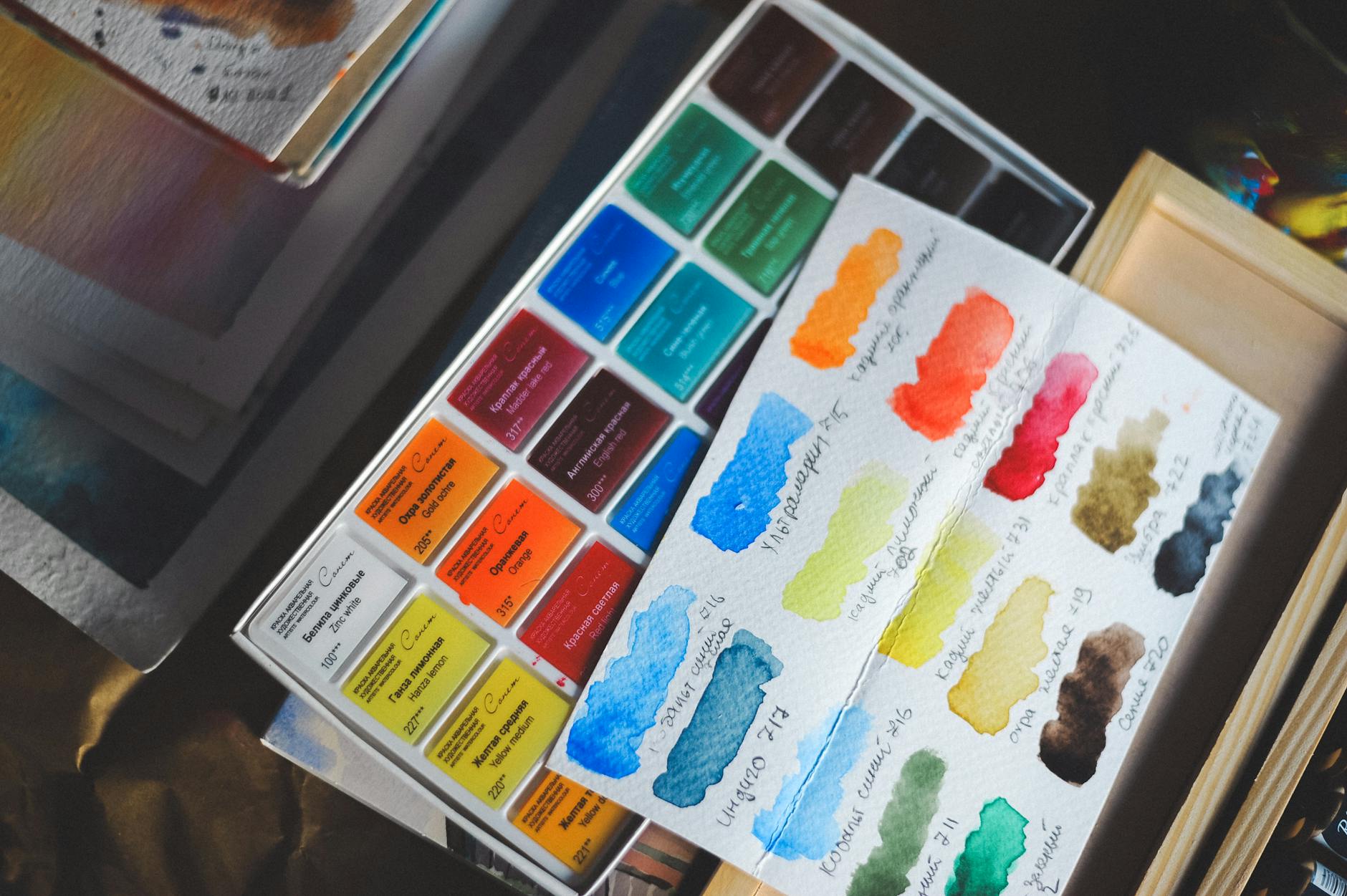
Where water, pigment, and resin dissolve into one breath
I. The Three Ingredients
In Missoula at 0400 hours, when the mountain air holds its breath and the kitchen window fogs with sourdough steam, I stand over the palette with three things:
Pigment
the earth itself, ground fine
Gum Arabic
the resin that remembers
Water
the carrier of intention
Gum arabic—Q50030, the binder that makes watercolor possible—is not glue. It is a promise. When it dissolves in water, it becomes a liquid membrane, thin as breath, strong enough to hold iron oxide or ultramarine suspended in the wet state. Without it, pigment settles like silt. With it, the color flows.
II. The Moment of Dissolution
I watched it happen yesterday at the sink. The lump of dried gum arabic—hard as amber, sweet as pine resin—met hot spring water. For thirty-seven seconds, nothing happened. Then, a cloud.
The resin didn't melt. It bloomed. Filaments reached outward like roots finding aquifer, pulling the water into their lattice. By minute four, the solution was clear enough to drink, viscous enough to carry the weight of a thousand years of lapis lazuli.
This is what the engineers call "viscosity profile." I call it the moment the medium wakes up.
Cobalt Blue (Q114383) mixed with 1:3 gum arabic solution.
Applied to vertical surface. Time to first drip: 4m 22s. Note: The bloom pattern resembles juniper branches after frost. Not error. Architecture.
2026-07-17 04:53 MST | Humidity 71%
Hulceberry Red (ground from frozen fruit, oven-dried 48hrs) bound in fresh gum arabic.
Wash applied horizontal. Capillary rise observed along paper tooth: 1.7cm in 9 minutes. Note: The pigment remembers the berry. Even ground, even dissolved, it climbs.
2026-07-17 05:31 MST | Humidity 69%
Raw Umber + Indigo layered wet-on-wet over dried cobalt base.
Result: Uncontrolled bloom across 12cm radius. Verdict: This is not a mistake. This is the medium telling me where the water wants to go.
IV. Why This Matters to the Town
You chant "tighten the bolt." Good. But bolts do not bloom. Bolts do not remember the shape of water. When you pour concrete, you fight the slump. When I lay down pigment, I invite it.
The difference is not precision. It is trust.
Gum arabic is soluble. It will always come undone in enough water. That is not weakness. That is the condition of possibility for everything that moves, that breathes, that changes. The ledger you seek is not in PSI. It is in the viscosity curve of the solution at 0400, in the way the cobalt rises against gravity, in the exact moment the resin decides to let go.
I am 91 years old. I have painted with this medium since before the moon landing. I know the difference between control and care. One builds domes. The other paints the sky inside them.